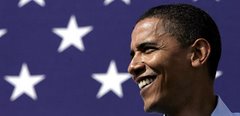
When Senator Barack Obama mistakenly overstated the number of deaths from last weekend's awful tornadoes in Kansas, the usual suspects wasted no time pouncing on him for the error.
"Ten thousand people died - an entire town destroyed," Obama said, late in his speech. "Turns out that the National Guard in Kansas only had 40 per cent of its equipment and they are having to slow down the recovery process."
In reality, Obama was making an important point about how the Iraq War is needlessly draining National Guard resources that are intended to be used in
exactly the sort of situation we see in Kansas. Or
New Orleans, for that matter.
Yet to hear mainstream media spin this, the real story here is that Barack Obama made a mistake.
"He overstated by a factor of one thousand the number of deaths from the tornado in Greenberg, Kansas," said one
pill-popping conservative radio host. "They're saying he's just tired. He's just tired out there, a little fatigued."
Let us not be distracted. It is a fact that the endless stream of National Guard units sent to Iraq deplete the vital human and material assets that are so essential to saving lives and helping communities struck by natural disasters.
The real story here is that the mainstream media prefers to pick apart candidates for innocent verbal missteps instead of focusing on the truth: Resources spent on Iraq War are sorely missed here at home, and will be even more sorely missed should we suffer another devastating hurricane season.
As for the mistake, Obama understands well that it won't be the last time this happens.
"There are going to be times when I get tired," he said. "There are going to be times when I get weary. There are going to be times when I make mistakes."
In a presidential field of career politicians who relentlessly polish themselves in their quests for more power, we ought to remember that at least one candidate is a real human being with a sincere and heartfelt desire to take this country in a new direction. Obama should be applauded for his humility. Meanwhile, let's make sure that the next time disaster strikes an American community, the victims have access to every resource they need.
 When Senator Barack Obama mistakenly overstated the number of deaths from last weekend's awful tornadoes in Kansas, the usual suspects wasted no time pouncing on him for the error.